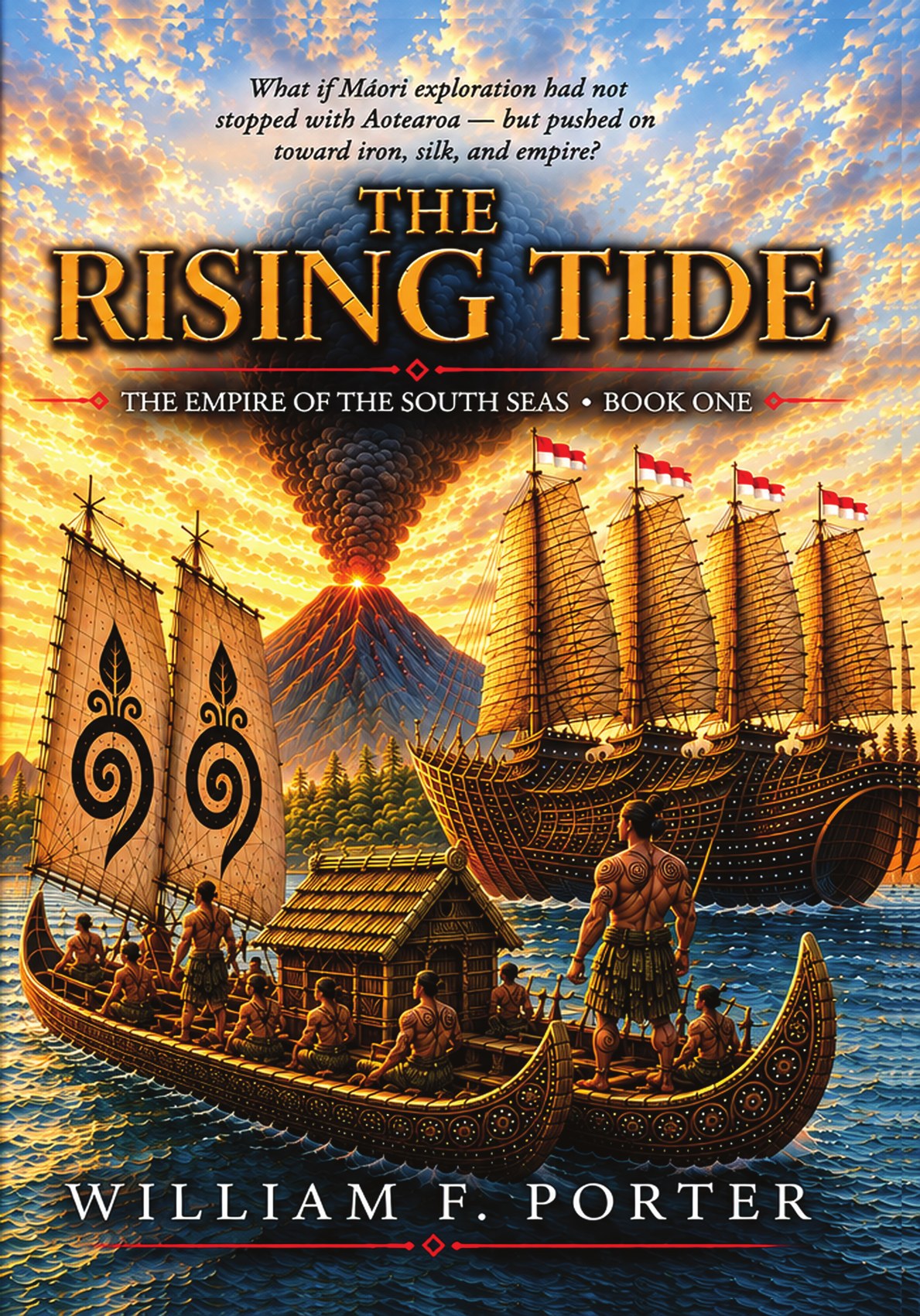
In the year 1300, eighty Māori survivors land a single waka on an unknown shore. They carry the rivalries of Hawaiki with them — and their chief makes the one decision that changes everything: to leave the old quarrels behind and turn their attention to the horizon instead.
What follows is a history that never happened. Gold and iron. Sails made of silk to speed their ships to the crocodile coast of the great dry land, the spice islands, and the trading ports of Java. A young man named Whetu, who keeps asking what else might be possible.
But the wider world does not give up its riches freely. There are famines, grasping kings, pirates in the strait and cannon on the water. Every league sailed brings its own risk.
This is a world that might have been. Sail into it.
Read the first 10 chapters free Request a copy